Air Conditioning Can Integrate with Your Design // A Professional Article by Ron Zaudrer
I’ll start with saying that for architects and designers, the air conditioning subject takes quite a bit of coordination in their end. I’ve gathered all the subjects that require coordination and attention, regarding the aesthetics of spaces, considering the effect air conditioning has on them.
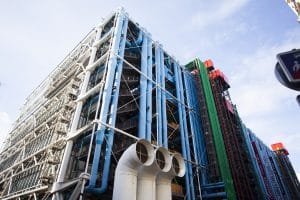
Excluding projects that enhance the air conditioning as a part of the design, such as exposed systems that are adjusted in their conception to industrial design. A striking example is a project that had created a huge buzz around the world is Centre Georges-Pompidou.
Of course this is an extreme example of a use in systems infrastructure to an overall design of a project, most common is a use in offices and public buildings.
Architectural and interior designs aren’t always industrial or Hi-Tec necessarily, and in this matter, the air conditioning isn’t the heart of the matter.
Well if we ignore the technical planning, the air conditioning method, the suppliers, the electricity points, the drainage points…
(which every design must include), only the aesthetics challenge is left.
So here are the architectural and interior design points that are affected mostly by air conditioning:
Ceiling Lowering
Wall Thickening
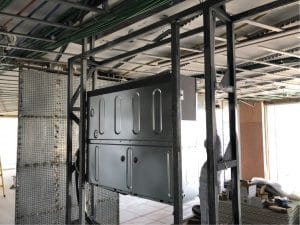
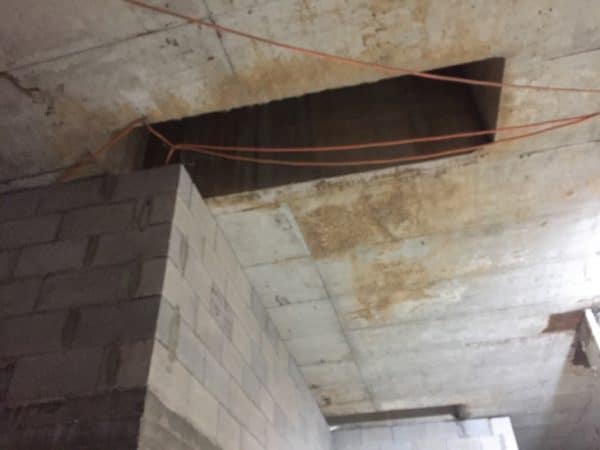
Planning for Channels in the Skeleton of the Building
Integration in Carpentry or Planned Elements
Service Hatches
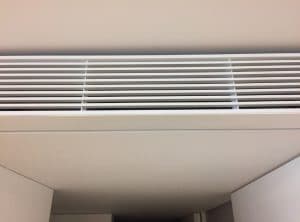
Air Diffuser (Shutter/Air Supply Grill)
Return Air Shutter/Air Supply Grill)
Locating Condensers (Exterior Unit)
Command and Control
Ceiling Lowering
Air conditioning is the electro mechanical system that takes most volume in a structure, and for that the most common assigned area for it is a low ceiling. Advantage – it doesn’t take floor space, and it is also easy to apply. Disadvantage – height distress. You probably didn’t plan this 3m height ceiling for lowering it after. At saturated construction the height distress is more common.
Wall Thickening
Any form of wall thickening is meant for creating space for an air conditioning unit/air ducts. Advantage – leaves the ceiling free from lowering it unnecessarily, and clean from air and service hatches. Disadvantage – takes floor space (the smallest unit takes 0.25 square meter to 0.75 square meter).
Integration of Carpentry Or Planned Elements
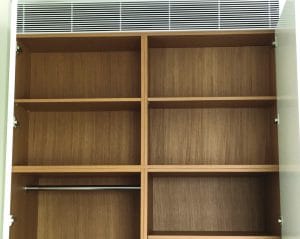
Integration (carburettor) interior units, channels and diffusers in carpentry. Such as closets, desks and libraries. Or elements that create enough volume and access to the air diffuser unit, that are created from any material or shape. Advantage – utilization of elements that are planned as a space for keeping the air conditioning. Disadvantage- limit the planning freedom, and the access to the air diffuser itself. And of course taking up volume, no lady will be happy about having less storage space.
Planning for Channels in the Skeleton of the Building
Another option for planning and locating the carburettor unit is at an adjacent space or at a different level such as the roof or the basement… Directing the supplied and return air by channeling it across the walls, spars, ceilings and floors. Advantage – changing the conditioning unit location to a space that can contain it. Disadvantage – takes air conditioning planning and construction into the first phase of the plans. And sometimes it isn’t possible to be added to an existing construction.
Service Hatches
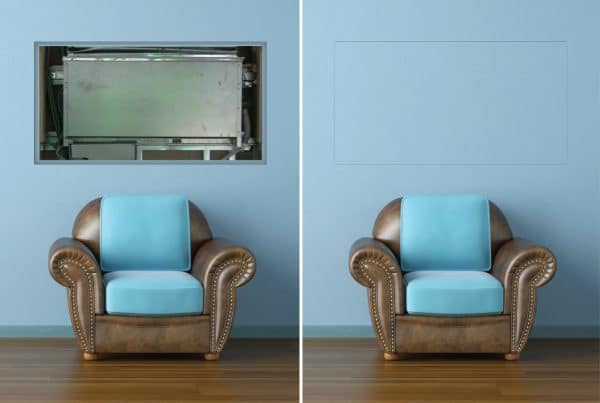
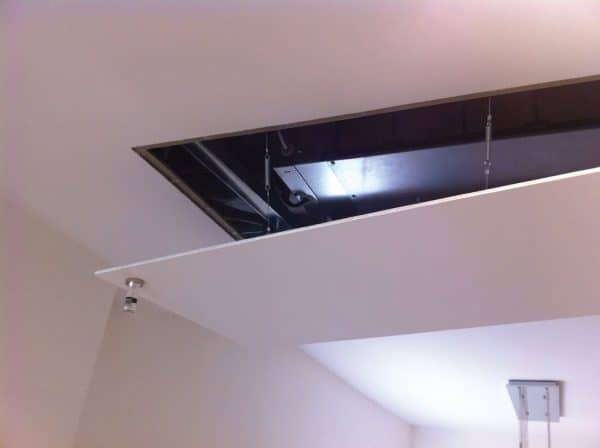
Service hatch is a convenient method to reach to the conditioning unit and maintain it regularly in ways of easy access to cleaning the filter. As much as the aesthetics demand has increased to hidden units, in accordance grew the demand to solutions that don’t interrupt the expected quality of the finish, and the remaining the same way for years. Advantage – the hatch allows simple access, and if in the right size, it is a guarantee that the air conditioner will be well maintained. Disadvantage – who wants to see it? As well as you don’t plan a closet without a door, you also don’t hide an air conditioner unit without access to it. (Most acoustic ceilings aren’t built for reopening of them, and should be made only by a professional).
Air Diffusers
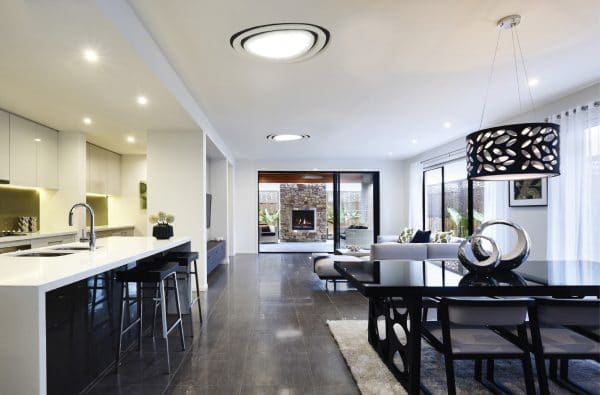
Air diffusers exist for different uses – high ceilings, low ceilings, stoves, undergrounds, getaways… It’s a niche that stayed without a design and technological reference for many years, until recently. Nowadays, we give attention to every detail in the space room, so we can’t ignore the air diffusers presence as well. Air diffusers that are made from a variety of materials and designs are available nowadays – acoustic, lighting combined, plaster ceilings combined, air diffusers that don’t sweat even in areas near the beach with high moisture (a disease of itself). A good choice of the diffuser can combine well with the design style and can even be unnoticed, diffusing the air consistently at the space without dead spaces, and without a direct air breeze that’s unregulated.
Condensers
Condensers (the engine unit, compressor, the external unit). There are different methods of hot release from condensers such as water, air, geothermal… most common today is air cooling. The condenser’s location must take a few factors into consideration – visibility, noise, maintenance access and unblocked work conditions of air flow. The condenser’s location can be everywhere, when it is best to keep it as close as possible, a roof, back yard, English yard, or a garage are good locations for it. The importance of the condenser’s location is critical to the success of avoiding noise, good access to it and nice aesthetics, for example locating the condenser on top of the roof in a visible sight, isn’t a lovely addition to the overall look of the house.
Command and Control
Visibility in command and control manners is about what you see, or don’t see on the wall. Today in the IOT era, you can download or change the traditional control and combine it in switches at the same space, very well. You can control the conditioning from every computer or smartphone easily. Locating the temperature sensors is critical for a good operation and a convenient feeling.